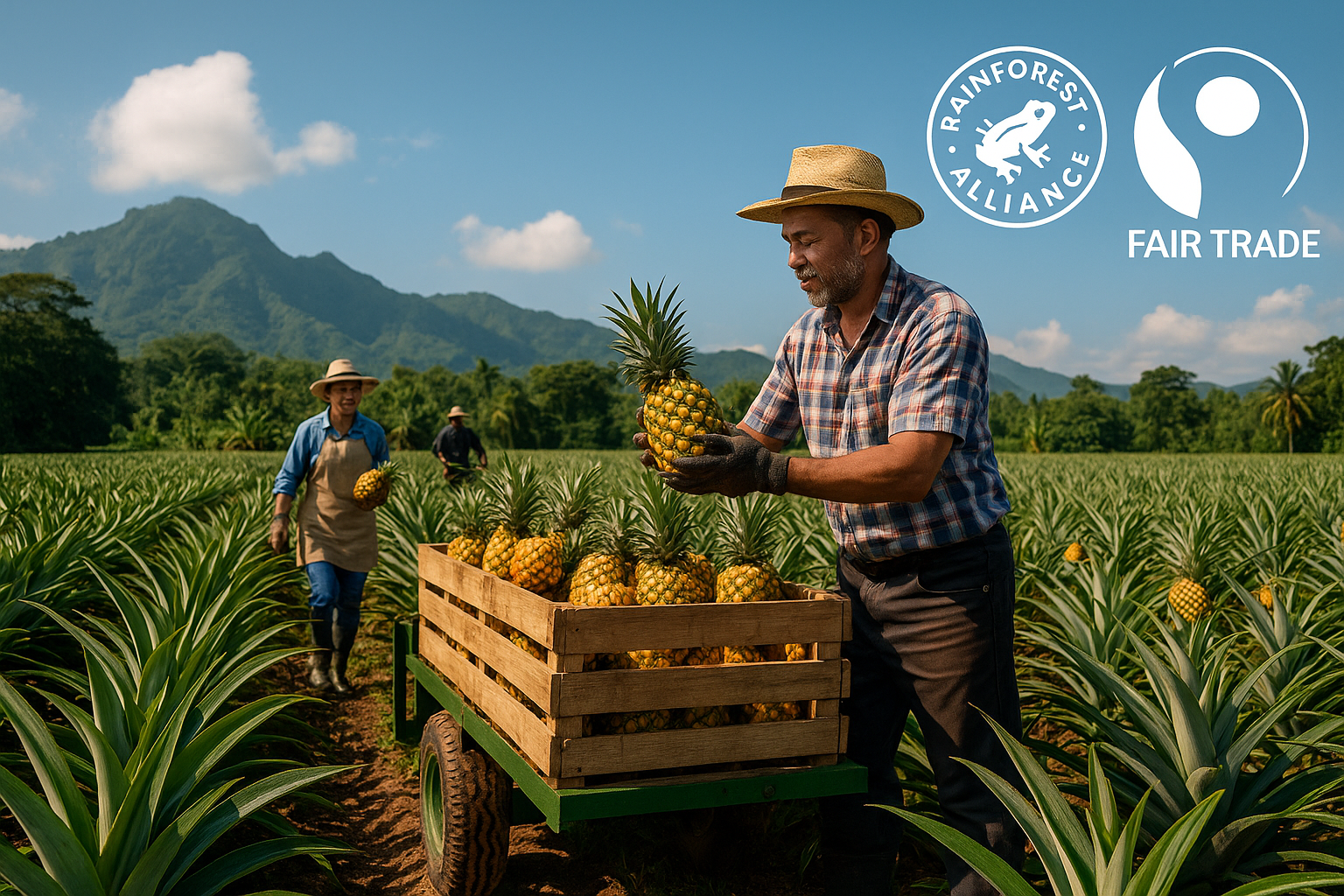
Costa Rican Agriculture: Quality Products and a Commitment to Sustainability
Introduction:
Costa Rica is internationally recognized for more than its breathtaking natural landscapes and vibrant culture. It is also a global leader in sustainable agriculture. For decades, the country has exported high-quality agricultural products that reach markets in Europe, North America, and beyond. Today, Costa Rica’s agricultural sector stands out not only for its diversity and quality but also for its strong commitment to environmental stewardship.
Agriculture at the Heart of Costa Rica’s Economy
Agriculture remains one of Costa Rica’s most vital economic pillars, employing a significant share of the workforce and contributing billions annually to export revenues. The country’s fertile volcanic soils, favorable tropical climate, and rich biodiversity allow year-round cultivation of both traditional crops and specialty goods.
Top export products include:
- Bananas – a major export to the U.S. and European markets.
- Pineapples – Costa Rica is one of the world’s top exporters.
- Coffee – renowned worldwide for its high-altitude Arabica beans.
- Melons, papayas, and tropical fruits – increasingly popular in North American and European supermarkets.
- Sugar and palm oil – stable contributors to export revenues.
Global Reputation for Quality
Costa Rican agricultural products enjoy a reputation for premium quality.
- Coffee: European roasters and North American specialty cafes prize Costa Rican beans for their flavor complexity and reliability.
- Pineapples & Bananas: Supermarkets in the U.S., Canada, Germany, and the UK market them as fresh, sustainably grown, and ethically sourced.
- Tropical Fruits: Demand is rising in Europe and Canada for melons, papayas, and passion fruit.
This reputation helps Costa Rican products command a competitive edge in premium markets where consumers are increasingly selective about the origins and qualities of their food.
A Commitment to Sustainability
Costa Rica leads Latin America in environmental sustainability.
- Over 98% of its electricity comes from renewable energy.
- Farmers follow stringent environmental standards that reduce pesticide use, encourage biodiversity, and protect water resources.
- Export certification programs (such as Rainforest Alliance, Fair Trade, and GlobalG.A.P.) give international buyers confidence in the environmental and ethical credentials of Costa Rican products.
- The government actively supports carbon neutrality and has set global benchmarks for conservation, with over 25% of national territory protected.
For European consumers concerned with sustainability, American retailers emphasizing eco-labels, and Canadian importers sourcing responsibly, Costa Rica has become an ideal partner.
Looking to the Future
Costa Rica continues to invest in:
- Organic farming and certification programs.
- Agroforestry practices that combine agriculture and reforestation.
- Sustainable packaging and logistics to further reduce its carbon footprint.
These innovations not only strengthen the competitiveness of Costa Rican agriculture in international markets but also assure global buyers that they are partnering with a country that values environmental and social responsibility as much as economic growth.
Closing paragraph:
From its legendary coffee to its world-class pineapples, Costa Rica offers more than just products – it offers trust, sustainability, and a long-term commitment to quality. For European, American, and Canadian partners, sourcing from Costa Rica means investing in food that nourishes people and protects the planet.